.jpg)
Taipei, August 6, 2026 — The Taiwan-Asia Exchange Foundation (TAEF) held its eighth anniversary forum, “Eight Years of Achievement: Navigating the Indo-Pacific,” on August 6, bringing together representatives from the government, legislature, diplomatic community, international think tanks, and civil society organizations to discuss the Indo-Pacific strategy, the New Southbound Policy (NSP), and the future of regional cooperation.
Participants emphasized that amid geopolitical shifts and the restructuring of global supply chains, Taiwan should deepen cooperation with like-minded countries and advance the New Southbound Policy toward “NSP+”, thereby strengthening partnerships and overall resilience across the Indo-Pacific.
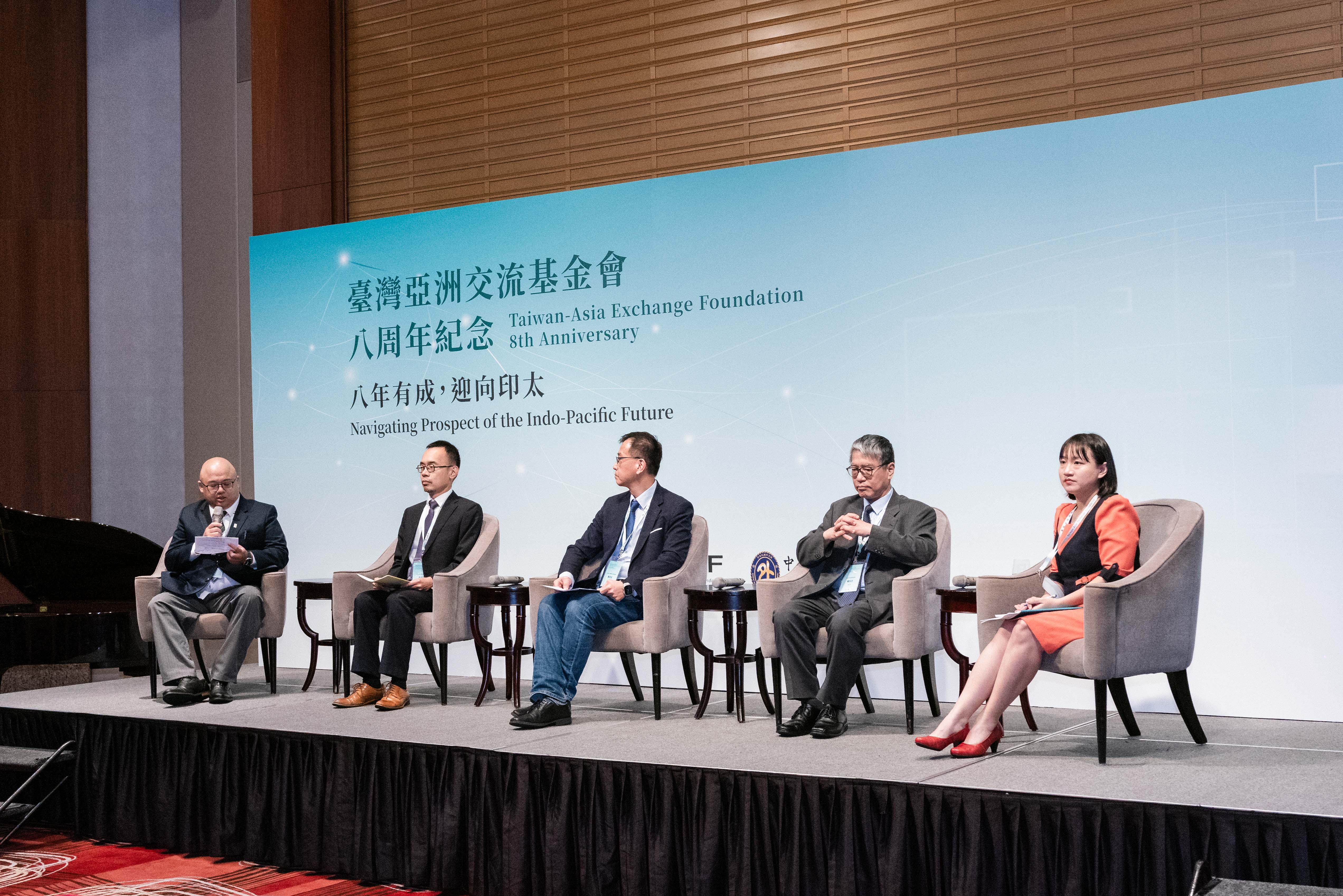
The first session, titled “Reinforcing Taiwan in a Turbulent World: Priorities, Paths, and Policies,” focused on Taiwan’s international engagement within the Indo-Pacific strategic landscape. The session was moderated by Michael Hsin-Huang Hsiao, Chairman of TAEF, and featured Legislator Chia-Pin Chung, William Liu, Director General of the International Trade Administration, Ministry of Economic Affairs, and Cheng-En Sung, Deputy Chairperson of the Ocean Affairs Council, as panelists.
Chung noted that as the security environment in the Indo-Pacific continues to evolve rapidly, the New Southbound Policy should be further developed into “New Southbound Policy Plus (NSP+)”, with cooperation extending beyond trade and economic relations to technology, supply chain resilience, and security.
He highlighted the unmanned vehicle industry as a major opportunity for cooperation between Taiwan and Southeast Asia. Chung proposed a transnational division-of-labor model combining U.S. and Japanese technology and R&D, Taiwan’s semiconductors and critical components, and manufacturing and assembly capabilities in Southeast Asian countries such as the Philippines, with the aim of establishing an unmanned vehicle supply chain cooperation framework along the First Island Chain.
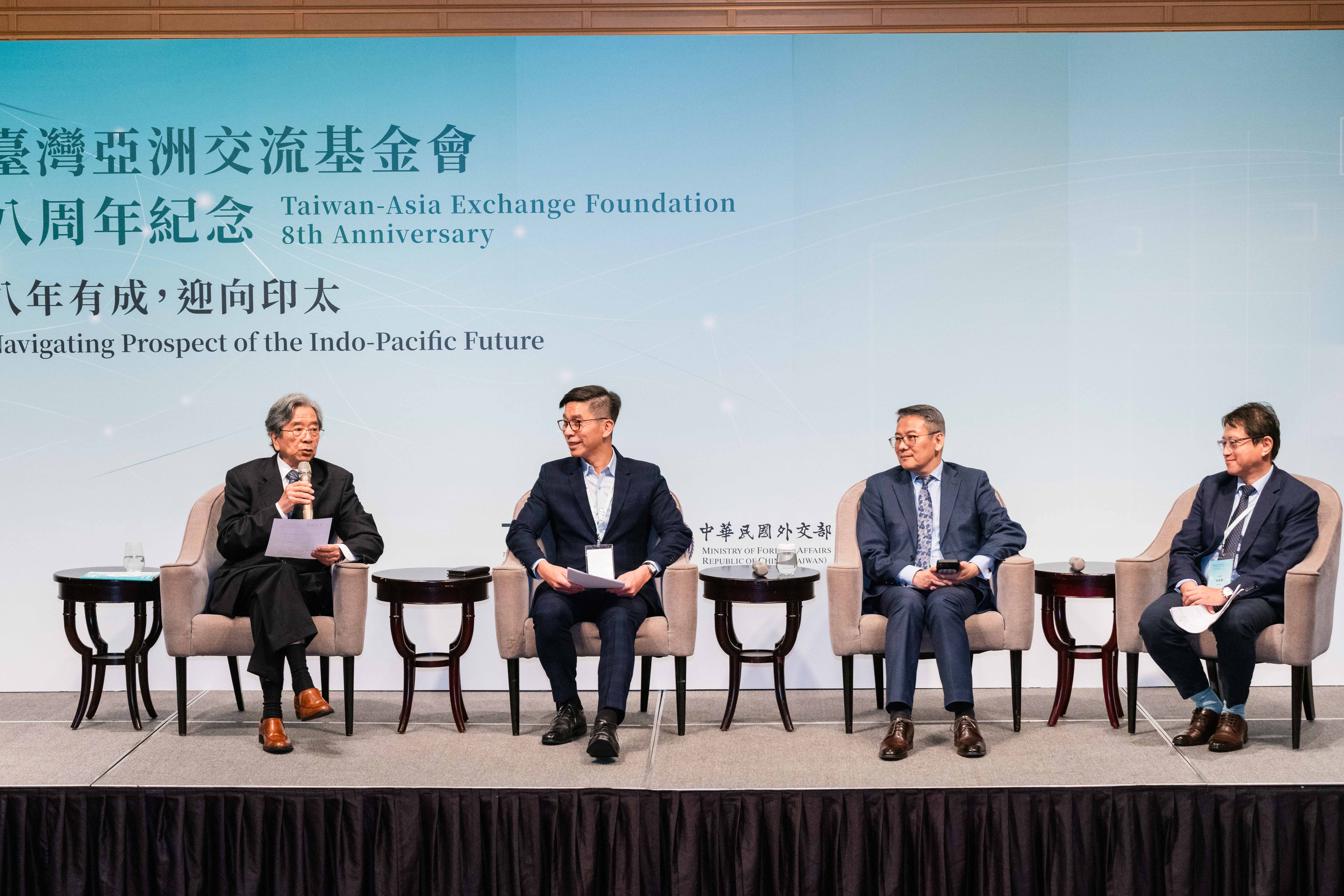
Sung stated that the Taiwan issue is now closely intertwined with Indo-Pacific security and global supply chains, emphasizing that “the more international Taiwan becomes, the safer it will be.” Liu, meanwhile, noted that global supply chains are shifting from an efficiency-driven model toward one centered on resilience. Taiwan should seize the opportunities created by industrial and supply chain restructuring to deepen economic and trade cooperation with Indo-Pacific and Southeast Asian partners.
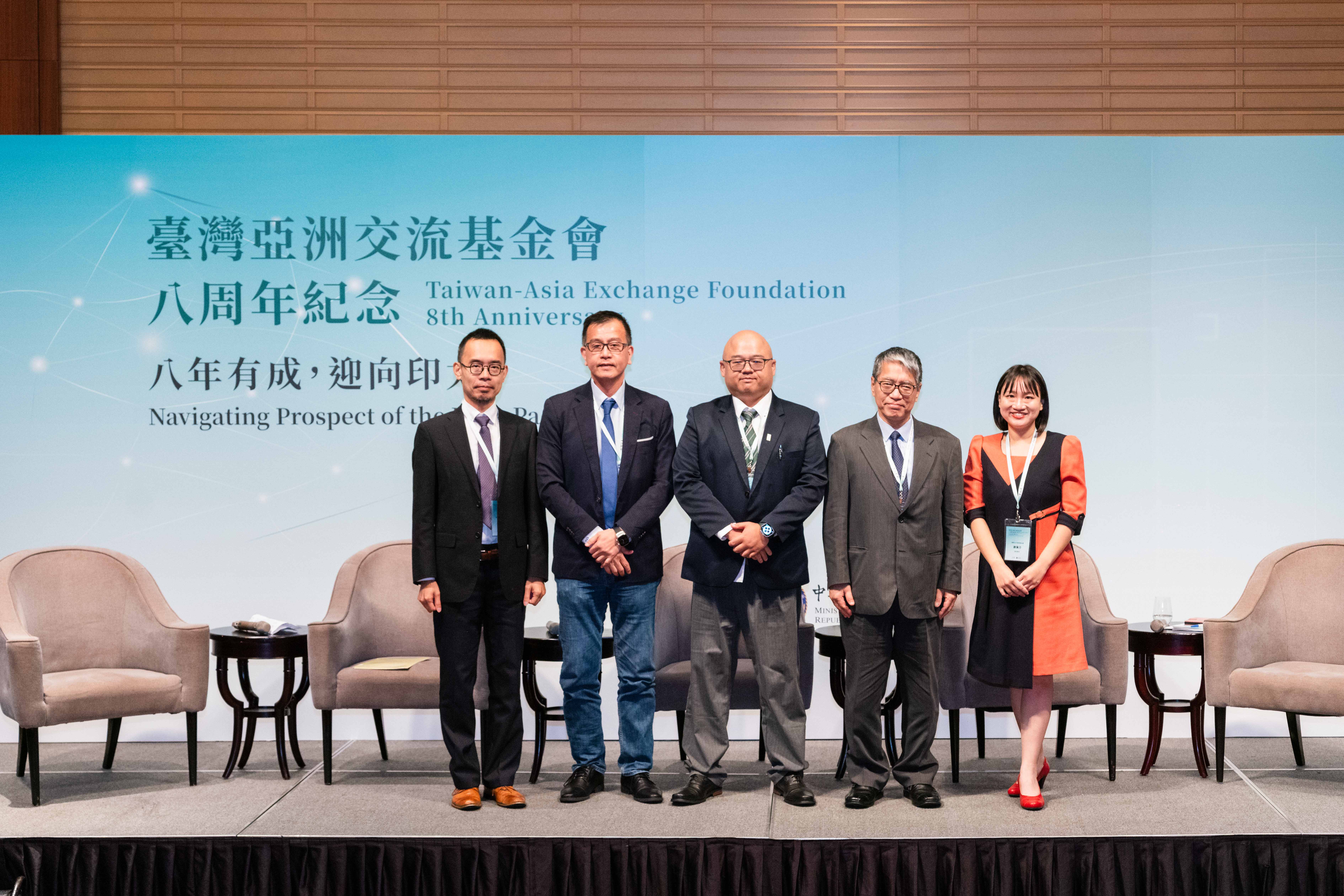
The second session, “Strategizing Civilian Partnerships in the Indo-Pacific: The Rationale & Practices of Think Tanks, NGOs, Youth, and Resilience Corridors,” focused on the role of civil society and nongovernmental actors in advancing Indo-Pacific cooperation. Moderated by Alan H. Yang, Executive Director of TAEF, the session brought together representatives from think tanks, Taiwan(ICDF), the disaster-prevention sector, and NGOs to share their experiences in building regional partnerships.
Peifen Hsieh, Deputy Secretary General of the Taiwan(ICDF), said that one of the New Southbound Policy’s most significant achievements has been the gradual expansion of government-to-government cooperation into a broader partnership network involving businesses, think tanks, and civil society organizations. This has created a model in which top-down and bottom-up approaches mutually reinforce each other.
She noted that Taiwan(ICDF) will continue to deepen cooperation with Indo-Pacific partners through three key approaches: Build Capacity, Build Resilience, and Build Partnership.
I-Chung Lai, President of the Prospect Foundation, said that over the past decade, the New Southbound Policy has achieved significant progress in economic and trade relations, people-to-people exchanges, and think tank cooperation. However, amid rapidly evolving global geopolitics, Taiwan must continue to consider how best to respond to the rise of the Global South and changes in the regional political environment.
He stressed the importance of more closely aligning the New Southbound Policy with the broader Indo-Pacific strategy while continuing to deepen cooperation with Southeast Asia, South Asia, and like-minded countries.
Yi-Ting Chen, Chairman of the Taiwan Disaster Prevention Industry Association, focused on disaster resilience. He noted that responses to major disasters cannot rely solely on government efforts but require the participation of businesses, civil society organizations, and local communities to establish a whole-of-society disaster preparedness and response system.
Drawing on Japan’s disaster response experience, Chen explained that businesses can proactively contribute to the mobilization of supplies, logistics and distribution, and evacuation support. Such participation not only demonstrates corporate social responsibility but also enhances the overall efficiency of disaster relief operations. He also called for Taiwan to further internationalize its disaster-prevention industry and work with regional partners to establish an Indo-Pacific disaster resilience cooperation platform.
Shang-Lin Lee, speaking from the perspective of nongovernmental organizations, emphasized that the New Southbound Policy is more than a government policy; it also represents Taiwan’s long-term commitment to its Indo-Pacific partners.
Through humanitarian assistance, education, healthcare, and community development programs, NGOs have worked directly with local communities to build mutual trust and establish bottom-up networks of cooperation. These efforts complement government initiatives and further deepen Taiwan’s relationships with its Indo-Pacific partners.
Concluding the forum, Alan H. Yang said that TAEF will continue to connect government agencies, think tanks, businesses, and civil society organizations while advancing cooperation in trade and economics, technology, disaster resilience, and youth exchanges.
Through these efforts, TAEF aims to build a more resilient network of Indo-Pacific partnerships, further expand Taiwan’s cooperation with regional partners, and enhance Taiwan’s international influence in regional cooperation.