—About the Program —
The young leaders’ engagement program of the Taiwan-Asia Exchange Foundation (TAEF) serves as a core pillar of Taiwan’s New Southbound Policy+ (NSP+). Our mission is to equip emerging leaders with the essential knowledge, skills, and international exposure needed to elevate their professional development and prepare them for meaningful careers. Through talent exchanges, conferences, dialogues, and cross-regional opportunities in Taiwan and beyond, TAEF is committed to cultivating a dynamic community of young leaders capable of inspiring and empowering the next generation. Aligned with this mission, TAEF plays a central role in uplifting and supporting young talents across the region. Under this pillar, our flagship initiative—the Southeast Asia–South Asia–Taiwan (SEASAT) Youth Camp—provides a platform for impactful exchange and hands-on learning. The program empowers participants with practical training, thematic knowledge, leadership development, and opportunities for partnership-building. By emphasizing a people-to-people approach, the camp enhances their skills and strengthens their capacity to create positive change in their communities. Furthermore, TAEF recognizes that sustaining a supportive and interconnected youth network is vital for long-term regional impact. Taiwan’s position as a hub for exchange enables us to not only empower young leaders but also learn from their insights and experiences. The foundation actively maintains engagement with our growing alumni community—nurtured over the past eight years—by providing opportunities for continued collaboration, reconnection, and global exposure. We believe that empowering youth leaders and supporting their endeavors will deepen their understanding of the world, strengthen Taiwan’s role in regional cooperation, and foster a more interconnected region built on genuine people-to-people ties.
— Flagship Events —
SEASAT Youth Camp
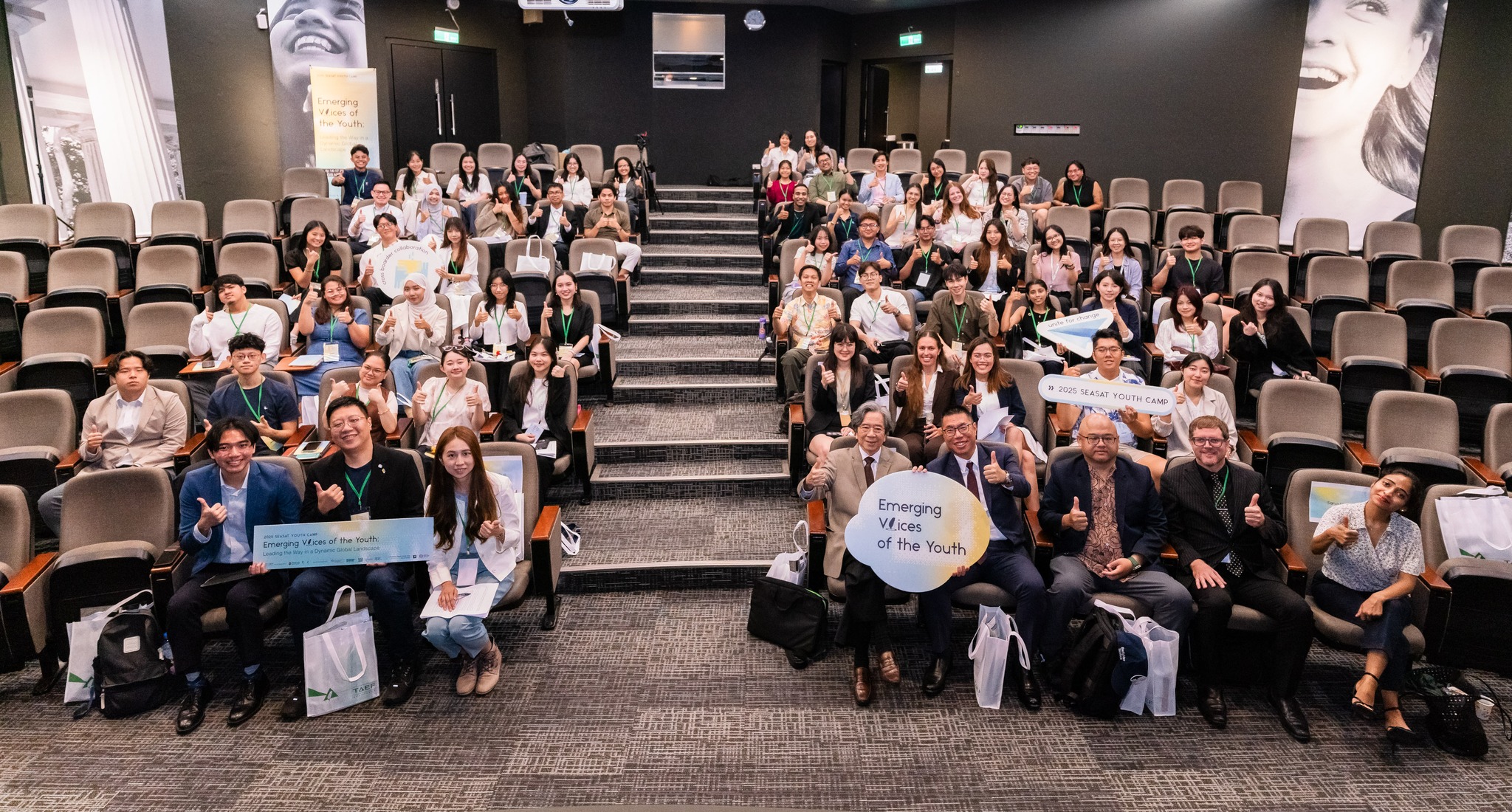
The Southeast Asia-South Asia-Taiwan (SEASAT) Youth Camp is an annual flagship event organized by the Taiwan-Asia Exchange Foundation (TAEF) since its establishment in 2018. This program aims to equip youth with the knowledge, skills, and networks necessary to navigate and shape a rapidly changing global landscape through a human-centered design process. The camp is specifically designed to help its participants grow as leaders who "think and do" for an inclusive and resilient future through design thinking training and exposure to the real world scenarios of the current geopolitical landscape. Since 2018, TAEF has hosted over 300 young leaders from across over 20 countries.
In 2025, the SEASAT Youth Camp hosted 50 young and emerging leaders, aged 18 to 29, with the aim to enrich their understanding of their Southeast Asian, South Asian, and Taiwanese neighbors and train these young emerging leaders on how to navigate challenges in geopolitics, human rights, workforce dynamics, and international cooperation.
In this 4-day camp, participants were exposed to contemporary issues affecting youth in the region, site visits, seminars, workshops, and the opportunity to converse with established leaders in Taiwan and abroad.
— Alumni Community and International Collaboration —
1. SEASAT Alumni Community
The TAEF Alumni Community aims to re-engage the previous delegates and participants of the TAYLE Programs over the past few years to further strengthen TAEF’s community across its like-minded partners. Launched in 2024, the SEASAT Alumni network aims to strengthen regional collaboration and youth leadership to facilitate the NSP+ Youth Corridor, and advance TAEF’s network and interactions with the young leaders across Taiwan’s likeminded partners.
2. ASEAN-EU Summer School Camp
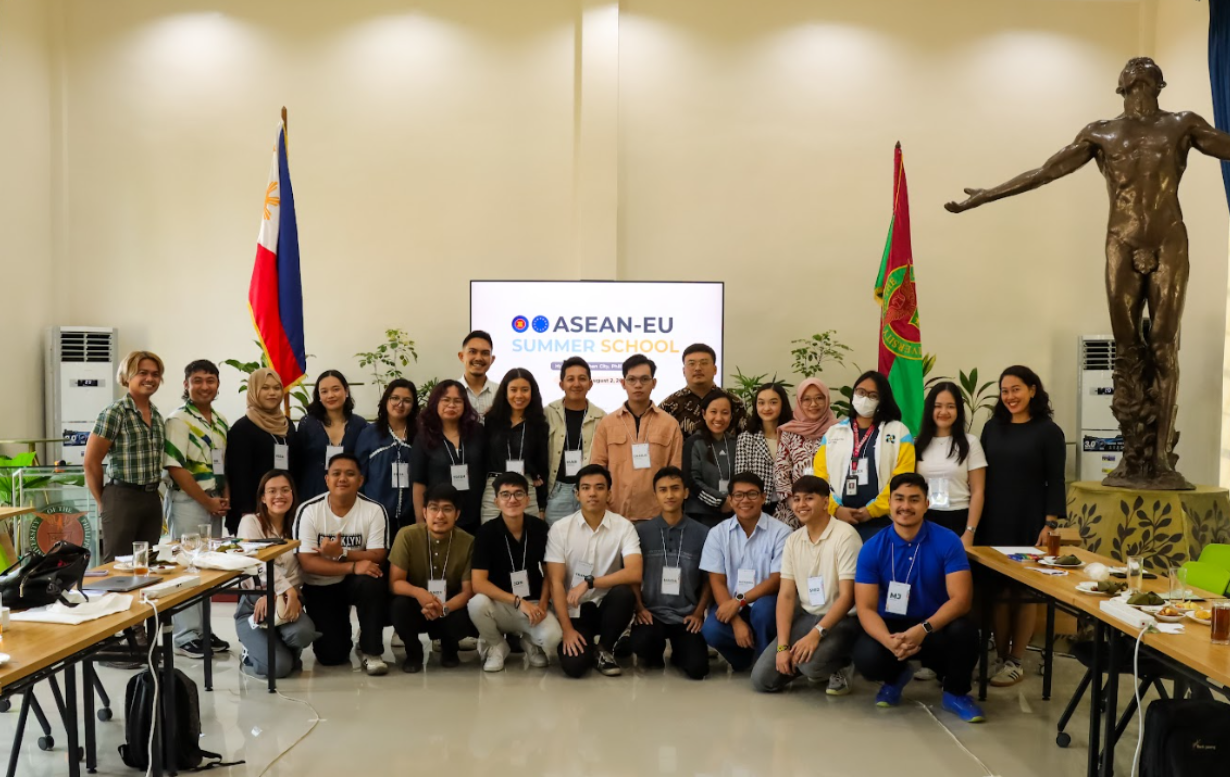
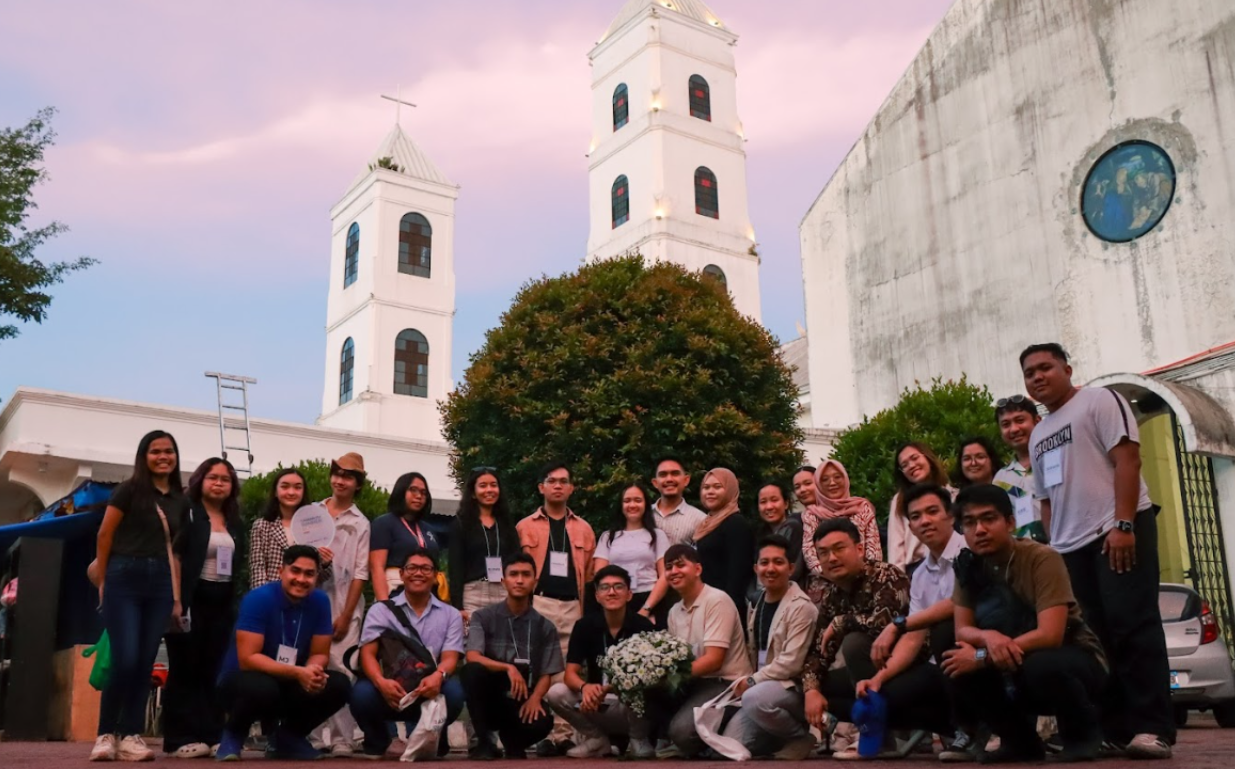
In 2025, TAEF partnered with the Student Think Tank for Europe-Asia Relations (STEAR), the University of the Philippines Tacloban College, and several committed regional institutions to co-organize the ASEAN–EU Summer School on Disaster Preparedness and Resilience in Tacloban City, Philippines — the first international platform dedicated to reflecting on the long-term recovery and lessons of Typhoon Yolanda (Haiyan). Through this collaboration, TAEF also supported the participation of SEASAT alumna Ngan Pham as a delegate in the program.
Dr. Alan H. Yang, Executive Director of TAEF, delivered remarks on cross-sectoral partnerships for NSP+-driven disaster preparedness, highlighting the essential role of youth and civil society in shaping resilient futures across Taiwan, the Philippines, and the wider region. His intervention further underscored Taiwan’s ongoing contributions to disaster resilience, capacity building, and regional engagement under the New Southbound Policy+.
This initiative marks TAEF’s first on-site international engagement in disaster resilience, as well as a new milestone in providing opportunities for members of the SEASAT community. It represents an important step forward in TAEF’s mission to help build stronger, more interconnected, and more prepared communities across Asia.
 |  |
— Charting the Future: Evidence-Based Reports on Youth Pathways and Progress —
Over the past year, the Taiwan-Asia Exchange Foundation (TAEF) has remained dedicated to fostering regional cooperation and advancing Taiwan’s New Southbound Policy (NSP). As part of this mission, the foundation continues to examine emerging youth trends and anticipate the opportunities and challenges young people will face amid a rapidly evolving global economy.
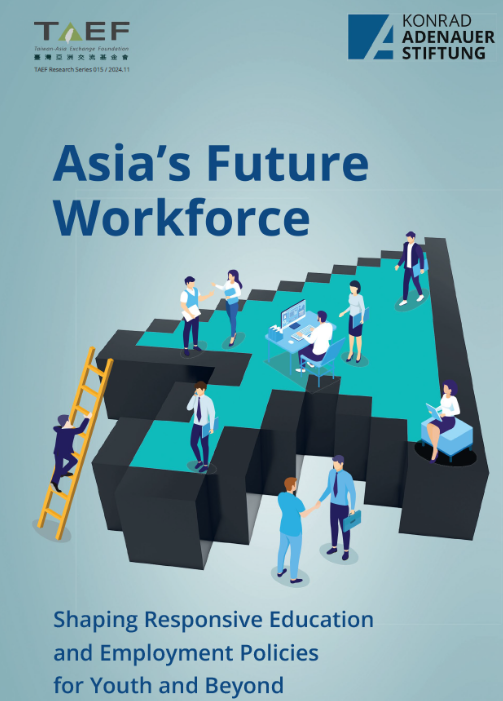
To deepen our engagement with the next generation, TAEF is committed to addressing shared regional challenges and identifying innovative solutions for Asia’s future workforce. This includes the publication of joint research reports with partner institutions such as the Konrad-Adenauer-Stiftung (Japan), aligned with our vision to establish an NSP Youth Corridor in the next phase of the policy—strengthening collaboration, knowledge exchange, and resource sharing among young leaders across Asia and beyond.
Building on insights accumulated over the past several years, the Konrad-Adenauer-Stiftung’s Regional Economic Programme Asia (SOPAS) and TAEF now present a comprehensive analysis of the future of work across eight Asian economies: Indonesia, Malaysia, India, Nepal, Japan, South Korea, and Taiwan, along with a focused review of Southeast Asia as a subregion.
Looking ahead, TAEF welcomes further collaboration with youth-led organizations and regional institutions to better understand how shifting geopolitics and rapid technological advancements are transforming youth trajectories and reshaping the future of the next generation.